
Why the Best Time to Buy Life Insurance Is Earlier Than You Think
The right time to buy life insurance could be sooner than you think. Explore the key factors that determine the best age and stage of life to buy life insurance at the lowest cost. Here's what you need to know.

Most people do not think about buying life insurance until something forces them to.
A new baby arrives, a friend passes away too young, or a spouse sits across the table and asks the question nobody wants to answer. Suddenly, life insurance goes from background noise and backburner discussion to urgent priority. Here's the big problem: by the time most people start paying attention, they have already lost their biggest advantage: time.
The math behind life insurance is not complicated, but when you buy it matters. Buying at younger ages means lower premiums, more coverage options, and a long-term financial safety net. Waiting even a few years can quietly cost you thousands of dollars over the life of a policy without you ever realizing it. I'll even show you later in the article.
This post is going to walk you through every major life stage and situation where buying a life insurance policy makes the most sense, so you can stop guessing and start making a decision you will feel good about for years to come. However, for most of us, the best time to buy life insurance is right now. Yes, right now.
Why Age Is the Most Important Factor in Life Insurance
Age isn't merely a number when it comes to life insurance. It is the single largest variable that determines what you pay, what you qualify for, and how much financial protection your family actually gets.
Life insurance companies calculate premiums using actuarial tables, which are essentially statistical models that predict risk based on age, health, and lifestyle. In lay terms, imagine a huge table with every age, gender, ethnicity, lifestyle, health conditions, etc. Underwriters, the people who analyze life insurance applications, look at your application and measure your specific situation against these actuarial tables. If your situation is healthier than the tables suggest, you'll pay a lower premium. If your situation is worse, then you will pay higher, or the underwriter may decline your application altogether.
The risk they analyze is the risk of you passing away too soon, i.e., mortality risk. For example, let's say you are 30 years old. For a normal 30-year-old Caucasian man, the actuarial tables suggest a life expectancy of 85. However, your situation suggests you could live until 90. You therefore will pay a lower premium rate. Conversely, if your situation indicates a life expectancy of 70, expect to pay more or have your application declined.
The younger and healthier you are when you apply, the less risk the insurance company is taking on, and the lower your monthly premium will be. This is not fake. It is the basic math that runs the entire industry. This is why the ideal time to buy life insurance is right now.
If you think I am wrong, let's do the math.
Math That Shows Why the Best Time to Buy Life Insurance Is Now
Generally speaking, the younger you are, the lower your rates will be. Younger applicants have a lower mortality risk. Here's an example.
- A 25-year-old in good health might pay $20 to $30 per month for a $500,000 term life insurance policy.
- A 40-year-old with the same profile might pay $60 to $80 per month for the same policy.
- A 50-year-old could easily pay $150 to $200 per month or more for identical coverage, especially if the person has moderate or serious health conditions.
Let's put some real numbers. Let's say a 30-year-old woman wants term life insurance coverage until age 60. She is very healthy and wants a $1,000,000 policy.
A 30-year term life policy will cost around $40 per month. Assuming she lives, she will spend about $14,400 on life insurance premiums.
Let's say she waits until age 40 to buy a policy; however, she is not as healthy as she used to be. She had a couple of children and has a minor health condition controlled by medication. She is still in good health, but she doesn't qualify for the best health class as she did at 30. A $1,000,000, 20-year term now will cost $77 per month. She will now spend $18,480 over the next 20 years, or $4,080 more!
That difference builds up over a 20- to 30-year policy term, adding up to thousands of dollars. And none of that math accounts for health changes that happen with age, which can reduce coverage options or trigger outright denials. Additionally, it doesn't account for carrier price increases, which they implement from time to time.
The moral of the story: The window for getting the lowest rates does not stay open forever. Every year you wait, the cost goes up and the options potentially narrow if you develop health conditions along the way.
The Major Life Events That Signal It Is Time to Buy Life Insurance
So, now you know that right now is the best time to buy life insurance.
However, forget the age factor for a moment. The clearest signals to buy life insurance are the moments when your financial decisions start directly affecting other people, namely your loved ones. Many life changes exist when the need for life insurance becomes a serious topic.
Life insurance exists to replace income, provide financial support, and cover obligations like your mortgage. It provides financial security. When your financial decisions become someone else's safety net, that is the moment life insurance stops being optional.
Here are the life events that most consistently signal it is time to stop delaying:
- Getting married. The moment two people combine their financial lives, one person's income often becomes critical to the other's stability. Even if both spouses work, the loss of one income can make it nearly impossible to cover mortgage payments, car loans, or even basic monthly expenses. I recommend even getting life insurance when you get engaged.
- Buying a home. A mortgage is usually the largest debt a person will ever carry. Without life insurance, a surviving spouse may not be able to keep the home they built their life in.
- Having a child. Children create an 18- to 22-year financial obligation that does not pause for tragedy. Life insurance is the only way to guarantee that obligation gets met regardless of what happens.
- Becoming a primary earner. If a partner, parent, or dependent relies on your income to stay financially afloat, you carry a responsibility that needs to be covered.
- Starting a business. Business owners often have debt, employees, and partners whose financial futures are tied to the company. Life insurance can fund buy-sell agreements and keep a business from collapsing after an unexpected loss.
Each of these instances creates a financial responsibility that outlasts you if you are gone. The sooner you match coverage to that responsibility, the better the outcome for everyone involved.
The Case for Buying Life Insurance in Your 20s
Your 20s might feel like the wrong time to think about life insurance. You are healthy, you probably do not have kids yet, and retirement feels like a lifetime away. That is exactly why this is actually the best time to buy.
Insurance companies price policies based on risk, and at 25, for example, your risk profile (i.e., mortality risk) is likely as low as it will ever be. That means life insurance premiums are at their absolute floor. Locking in a policy now is one of the few financial decisions where procrastinating costs you real, measurable money.
- There is no guarantee of your insurability. A diagnosis of diabetes, rheumatoid arthritis, high blood pressure, substance abuse, or even depression in your 30s or 40s can result in significantly higher premiums or coverage denials. Getting coverage while you are healthy permanently locks in your current health rating. And, yes, a few carriers offer life insurance to age 70, so you could conceivably get a 45- to 50-year term.
- Term life is remarkably affordable in your 20s. A healthy 25-year-old can often get a 30-year term policy for less than the cost of a streaming service per month. It's true!!
- Whole life policies build cash value over time. Starting a whole life policy early gives the cash value component more time to grow, delivering a financial asset alongside the death benefit. Whole life insurance is useful if you want to implement a "be your own banker" strategy.
- Student loans can create co-signer liability. If a parent co-signed your student loans, those loans do not disappear when you die. They fall to the co-signer. A policy can cover that obligation.
Buying life insurance in your 20s is not about being morbid. It is the perfect time to buy an important financial planning tool. It is about being smart with money at the exact moment when being smart costs you the least.
What Happens When You Wait to Buy Life Insurance Until Your 30s and 40s
The 30s and 40s are when life insurance usually becomes impossible to ignore. Mortgages, children, career growth, and other financial responsibilities all converge into a picture where the stakes of being uninsured are undeniably high.
The good news is that this window still offers solid coverage at reasonable rates, especially in your early to mid-30s. The disappointing news is that the clock is ticking faster than most people realize. Moreover, health issues or lifestyle situations start to creep up. Before you know it, the window for lower premium rates closes.
Here is what changes as you move through this decade:
In your early 30s: Rates are still favorable. Health is typically still on your side. This is the second-best window for locking in strong coverage at a manageable premium. People buy life insurance when they have recently gotten married, had a child, or bought a home.
In your mid-30s: Premiums begin climbing noticeably. A 35-year-old pays more than a 30-year-old for the same policy. Prices increase even in that 5-year difference. Additionally, health screenings start uncovering issues that did not exist five years earlier. The savings gap between what you could have paid and what you are paying now becomes real.
In your 40s: Of course, life insurance coverage is still very much available, but costs can be two to three times higher than your 20s equivalent. This is also the decade where health conditions start appearing on applications, which may limit policy options, trigger exclusions, or raise premiums significantly.
The 40s are not too late. They are just more expensive. And every year you continue waiting in this window adds additional cost and complexity to an already urgent situation.
Buying Life Insurance After 50: What You Need to Know
Of course, buying life insurance after 50 is absolutely possible. We help many people do so all the time. However, it requires a clearer strategy and honest expectations about what coverage looks like at this stage.
After age 50, the purpose of life insurance often changes. For many people, it becomes less about replacing income and more about leaving a legacy, helping cover end-of-life expenses, or passing on financial support to future generations.
- Term life is still available, but 20- and 30-year terms become harder to qualify for and significantly more expensive. Ten-year and 15-year terms are often more practical and affordable.
- Guaranteed universal life is a popular option after 50. It delivers lifelong coverage with a fixed premium and a guaranteed death benefit, without the higher cost of traditional whole life.
- Final expense insurance covers burial, funeral expenses, medical bills, and small debts. Policies are typically smaller (coverage amounts ranging from $10,000 to $50,000) and easier to qualify for, making them a feasible option for those with health challenges.
Health becomes a bigger gating factor. Pre-existing conditions like heart disease, kidney issues, diabetes, or cancer history will affect both the type of policy available and the premium significantly.
The key insight here is that buying after 50 is not a mistake. It just requires a more targeted conversation with an experienced insurance broker (hint: us😄) who can match the right product to your specific situation.
Special Situations That Move Up the Timeline to Buy Life Insurance
Sometimes, a situation or issue accelerates the need to buy life insurance. These are the scenarios that move life insurance from a "someday" item to a "now" priority.
If any of the following apply to you right now, the right time to buy life insurance is not next quarter. It is now.
You are the primary caregiver for an aging parent. If your death would leave a parent without support or financial support, your life insurance need is immediate and real, regardless of your own family situation.
You are a single parent. Without a partner to absorb financial or child care responsibilities, the stakes of being uninsured are higher than almost any other situation. A term life policy is one of the most important financial tools a single parent can own.
You have significant debt with a co-signer. This situation happens more than you think. Personal loans, private student loans, and even some business debt can fall to a co-signer upon death. Life insurance protects them from inheriting your financial obligations.
Your employer-sponsored life insurance is your only coverage. Group life insurance through an employer typically caps at one to two times your annual salary and disappears the moment you change jobs. It is a starting point, a nice-to-have, but it is not a plan or a long-term solution.
A friend or loved one unexpectedly passed away without life insurance. As sad as this situation is, this scenario is the wake-up call people need about their own mortality, coupled with the after-effects of seeing a surviving family maneuver life after the death of a loved one.
You have recently been diagnosed with a health condition. This is counterintuitive but important. Most people "wake up" to the need for life insurance after a diagnosis or lifestyle situation. While you may not qualify for standard rates, it is worth looking into what you qualify for. Additionally, as an independent insurance agent, I offer a variety of guaranteed-issue life insurance options with coverage amounts of $100,000 or more.
Each of these situations removes the luxury of waiting. If your risk has increased, acting promptly gives you the best opportunity to make a financially responsible choice.
How Much Life Insurance Coverage You Actually Need
Knowing when to buy is only half of the equation. Knowing how much to buy is what turns a life insurance policy from a checkbox into a real financial plan.
The most common mistake people make is underinsuring. They pick a number that sounds reasonable, often whatever their employer offers as a default, without running any actual math.
Here is an easy way to calculate how much coverage you need:
- Multiply your annual income by 10 to 12. This factor is the most widely used starting point. It replaces your income for a decade or more, giving dependents time to adjust financially.
- Add your total outstanding debt, including mortgage balance, car loans, personal loans, and credit card debt.
- Add the cost of future obligations. If you have children, estimate college tuition costs and add them to the total. If you have a stay-at-home spouse, calculate the cost of replacing the services they provide.
- Subtract existing assets. Savings accounts, existing policies, and investments can offset the total coverage needed.
We've created a handy life insurance needs worksheet that does just this. The final number often surprises people. Many people need $1,000,000 or more in life insurance coverage once they account for mortgage payments and college costs.
Getting the amount right matters just as much as getting the timing right. A policy that is too small to cover your actual obligations creates a false sense of security that can leave your family in a genuinely difficult position if they have to make a death claim.
Term vs. Whole Life: Choosing the Right Policy Type for Your Stage of Life
The type of policy you buy matters as much as when. Choosing the wrong product for your current life stage could mean paying for features you do not need or paying way more than you needed to.
Different life stages, among other factors, determine the type of life insurance you should purchase. Keep in mind that you can have several different policies and types. For example, I personally have several term life policies and a couple of whole life plans. Types of life insurance policies include:
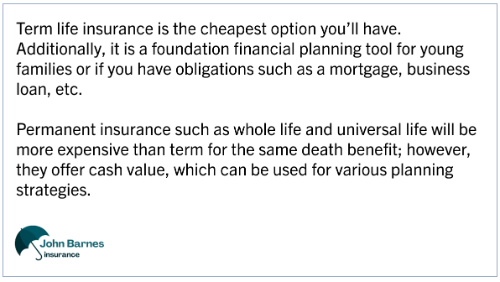
Term life insurance is the most straightforward option. You pay a fixed premium for a set number of years (10, 20, or 30 being most common), and the policy pays out a death benefit if you pass away during that term. It is affordable, predictable, and ideal for covering specific financial obligations with an end date, such as a mortgage or the years your children are dependent on you. Term life is a core financial planning tool.
Whole life insurance provides permanent coverage that lasts your entire lifetime and builds cash value that grows tax-deferred. Although it costs more than term life insurance, it never expires and can become a valuable financial asset over time. Many people use whole life insurance as part of a long-term wealth and legacy strategy rather than solely for income protection.
Universal life insurance sits between the two. It offers permanent coverage with increased flexibility in premiums and death benefit amounts, and additionally builds cash value. It is a stronger fit for people who want lifelong coverage but need more adaptability than whole life provides. Indexed universal life is the most common type of universal life insurance on the market today.
A simple way to decide: if you have young children, a mortgage, and are starting to save for retirement, then term life insurance makes the most sense. If you are thinking about estate planning, leaving a legacy, or building tax-advantaged cash value over decades, explore whole or universal life plans. Many people hold both.
The right conversation to have is not which type is better in a vacuum. It is which type matches your current obligations, needs, budget, and long-term goals at this specific moment in your life.
Frequently Asked Questions About the Best Time to Buy Life Insurance
We answer frequently asked questions about the best time to buy life insurance.
What is the ideal age to buy life insurance?
The ideal age to buy life insurance is typically in your 20s or 30s when you're healthy, and premiums are generally lower. Buying early allows you to lock in affordable rates before age-related health risks increase.
However, if you missed that window, the ideal time to buy life insurance is now. You likely won't be as healthy as you are right now.
Is it worth buying life insurance if I'm young and single?
Yes. Purchasing coverage while you're young can secure lower premiums and may help cover future financial obligations, debts, or funeral expenses. Permanent life insurance policies, such as whole life, also accumulate cash value over time. Young people have a major advantage: they are usually healthy. Buying life insurance coverage at this point creates a solid, long-term foundation for financial planning.
Does life insurance get more expensive every year I wait?
In most cases, yes. Insurance rates generally increase as you age because insurers view older applicants as higher risk. Add in that health conditions generally increase with age; waiting can result in significantly higher long-term costs.
Should I buy life insurance before getting married?
Buying coverage before marriage can be beneficial because you may qualify for lower rates while you're younger and potentially healthier. It also provides a financial safety net for your future family.
Is having a baby a sign that I need life insurance?
Absolutely. A child often increases financial responsibilities, making life insurance an important way to provide income replacement, education funding, and financial protection if something happens to a parent.
Should homeowners have life insurance?
Yes. Many homeowners use life insurance to protect their families from the financial burden of mortgage and housing expenses if they pass away unexpectedly.
Is there ever a bad time to buy life insurance?
Yes. The worst time is often after a major health diagnosis. While coverage may still be available, premiums could be higher, and options may be more limited than when you're healthy. The moral of the story is to buy life insurance when you don't need it.
Can I buy life insurance after retirement?
Yes. Numerous insurers offer coverage for seniors. Life insurance in retirement may help cover final expenses, pay off debts, leave an inheritance, pay estate taxes, equalize an estate, or support a surviving spouse.
How does my health affect the best time to buy life insurance?
The healthier you are, the more favorable your rates are likely to be. Buying before developing chronic conditions can greatly reduce the cost of coverage.
Should I buy life insurance before changing careers?
If you're planning a career transition, particularly to a higher-risk occupation, securing life insurance beforehand could help you obtain more favorable premiums.
Is pregnancy a good time to purchase life insurance?
Yes. Pregnancy often prompts families to review their financial protection needs. Applying during a healthy pregnancy may provide valuable coverage before the child arrives. However, ideally, you will want to buy life insurance BEFORE you are pregnant so you can lock in your health now. For example, pregnancy complications such as preeclampsia can impact underwriting decisions.
What life events should trigger a life insurance review?
Major milestones such as marriage, divorce, having children, buying a home, starting a business, or receiving an inheritance are all good reasons to reevaluate your coverage.
Can I buy life insurance if I already have coverage through work?
Yes. Employer-provided life insurance often offers limited coverage and may not be portable if you change jobs. A personal policy can provide more comprehensive and long-term protection. It's a good idea to buy your own individual life insurance policy. That way, you don't have to worry about your company's policy if you change jobs.
How much money can I save by buying life insurance early?
The savings can be substantial. Someone who purchases coverage in their 20s may pay significantly less over the life of the policy than someone who waits until their 40s or 50s.
Should business owners buy life insurance sooner rather than later?
Yes. Business owners often use life insurance for succession planning, key-person protection, and business loan obligations. Early planning can help secure lower costs and broader options.
If I am healthy today, should I wait for better rates in the future?
Generally no. Life insurance rates rarely decrease simply because you get older. Locking in coverage while you're healthy can help protect against future health changes.
Does my financial stability affect when I should buy life insurance?
While affordability matters, waiting until you're financially "perfectly ready" could mean paying higher premiums later. You may never be "ready". Many affordable policy options exist for different budgets. The best time to buy life insurance is right now.
When is the best age to buy term life insurance?
Term life insurance is commonly purchased during the years when people have significant financial responsibilities, such as raising children, paying a mortgage, or supporting a spouse.
Can I buy life insurance for estate planning purposes?
Yes. High-net-worth individuals often use life insurance to help cover estate taxes, equalize an estate, transfer wealth efficiently, and leave a financial legacy for beneficiaries.
What's the simplest rule for deciding when to buy life insurance?
The best time to buy life insurance is usually before you need it and while you're healthy. Early action generally provides more options, lower premiums, and greater financial protection for loved ones.
Final Thoughts About The Best Time to Buy Life Insurance
The single most important thing this post can leave you with is simple: the best time to buy life insurance is always earlier than you think it is. So, if you haven't purchased a policy yet, the best time is right now. Not because death is around every corner, but because waiting costs you money, health flexibility, and peace of mind that you cannot get back once it is gone.
If one of these stages or situations resonates with you right now, that is not a coincidence. That is the signal you have been waiting for.
Do you have questions or need our assistance? Contact us or use the form below.
No matter your situation, we have life insurance options available, even guaranteed issue life insurance with high death benefits ($100,000 and higher). These can be great options for those with moderate health conditions, which can make getting life insurance tough.